TYPE U

INTRODUCTION

Shaping the environmentto settle body and mind.

The human body
responds to its surroundings
and is always adjusting itself.

Sound. Light. Temperature. Air. What we see.
And the stimulation that comes from people and information.

Even when we are not aware of it
the body keeps taking all of this in.
A living room open to snowy mountains

FOREST / CITY

In the city
and in the forest.

One study, carried out at sites across Japan, compared the body’s responses when the same people walked through and looked out over forests and cities.

In the forest, pulse rate and blood pressure were lower than in the city, and activity of the parasympathetic nervous system — which works when the body is at rest — was higher. Differences were also seen in a hormone associated with stress.

In the forest (compared with the city)
Pulse rateLower
Blood pressureLower
Parasympathetic activityHigher
Stress-related hormone (cortisol)Lower

Park BJ, Tsunetsugu Y, Kasetani T, Kagawa T, Miyazaki Y. The physiological effects of Shinrin-yoku (taking in the forest atmosphere or forest bathing): evidence from field experiments in 24 forests across Japan. Environmental Health and Preventive Medicine. 2010;15(1):18–26.

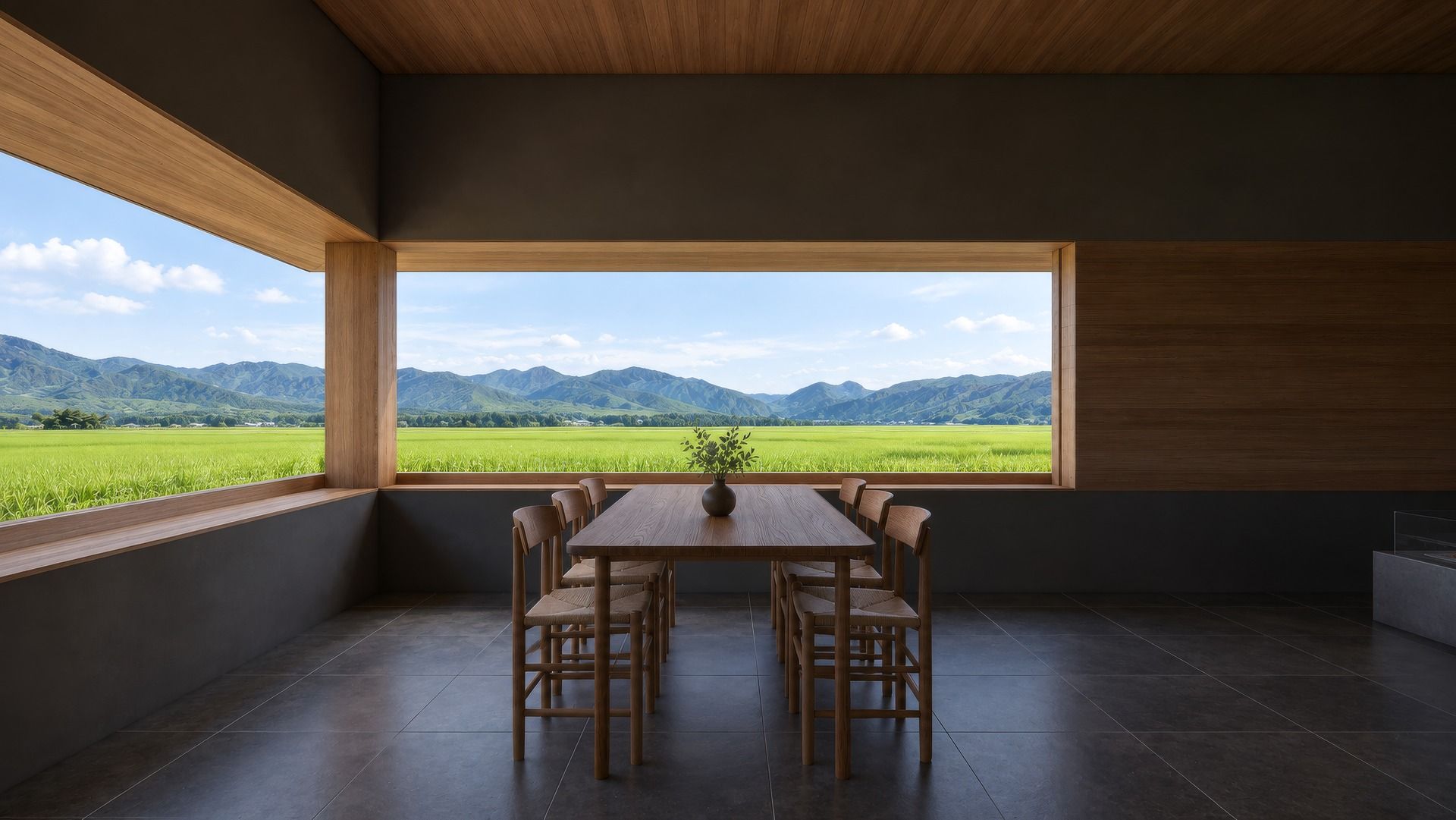
A summer dining room open to fields and mountains

ALLOSTASIS

The body keeps adjusting
to stay steady as things change.

The body has ways of keeping itself steady while adapting to changes around it. This process is called “allostasis.”

Heat and cold, noise, tension. Adjusting to change is a response the body needs.

But when that adjustment is repeated with little time to rest, the strain is thought to build up in the body. This accumulation is called “allostatic load.”

McEwen BS. Protective and damaging effects of stress mediators. New England Journal of Medicine. 1998;338(3):171–179.

RECOVERY

An environment
that eases what has built up.

Feeling the wind. Feeling the light. Nature within view, and the sounds of nature within hearing.

Time spent in surroundings connected to nature is said to help a tense body find its calm again.

It has also been reported that people who live with more greenery nearby tend to have a lower allostatic load.

Ulrich RS, et al. Stress recovery during exposure to natural and urban environments. Journal of Environmental Psychology. 1991;11(3):201–230.
Alvarsson JJ, Wiens S, Nilsson ME. Stress recovery during exposure to nature sound and environmental noise. International Journal of Environmental Research and Public Health. 2010;7(3):1036–1046.
Egorov AI, et al. Vegetated land cover near residence is associated with reduced allostatic load and improved biomarkers of neuroendocrine, metabolic and immune functions. Environmental Research. 2017;158:508–521.

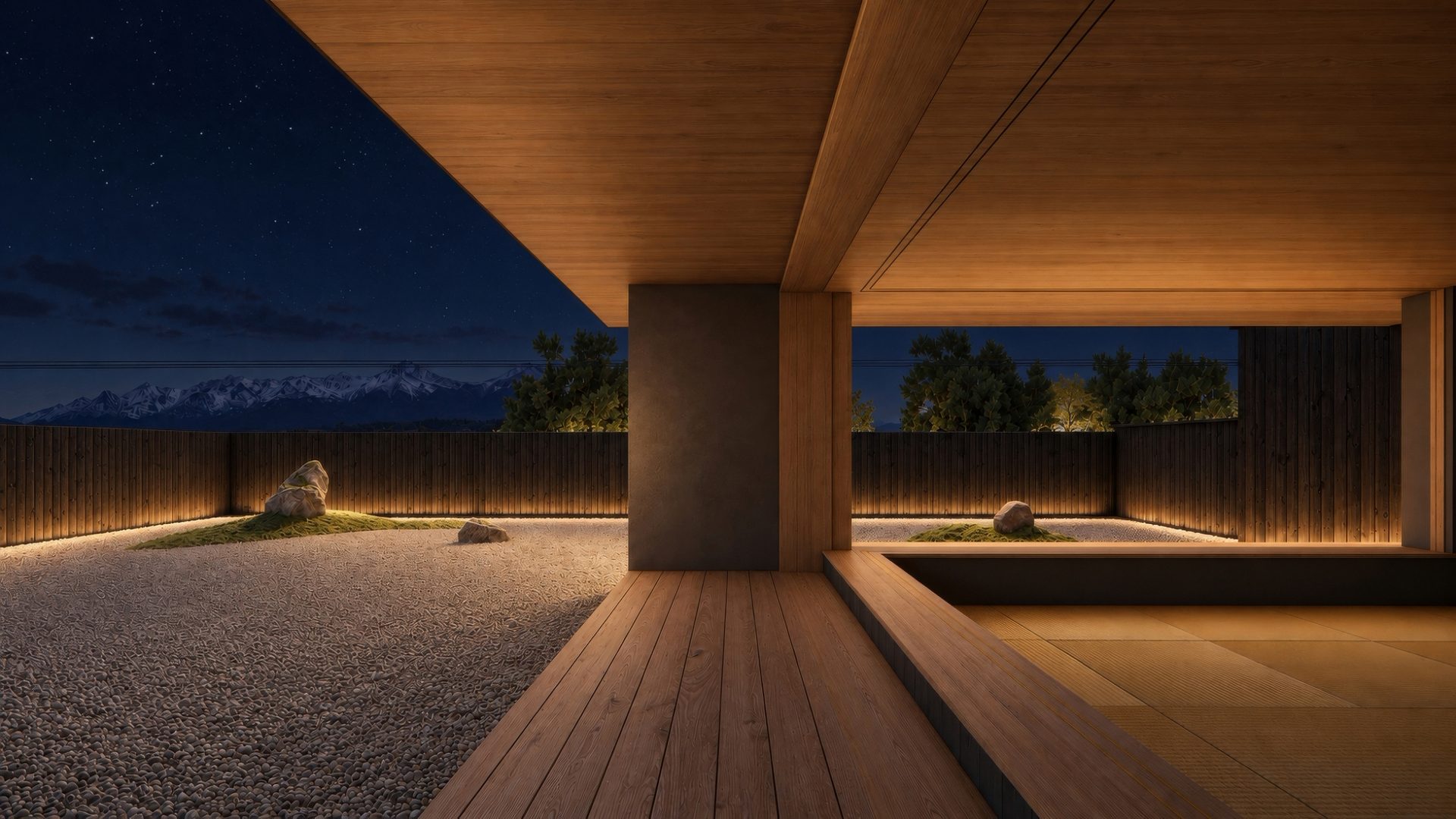
A tatami room and garden by day
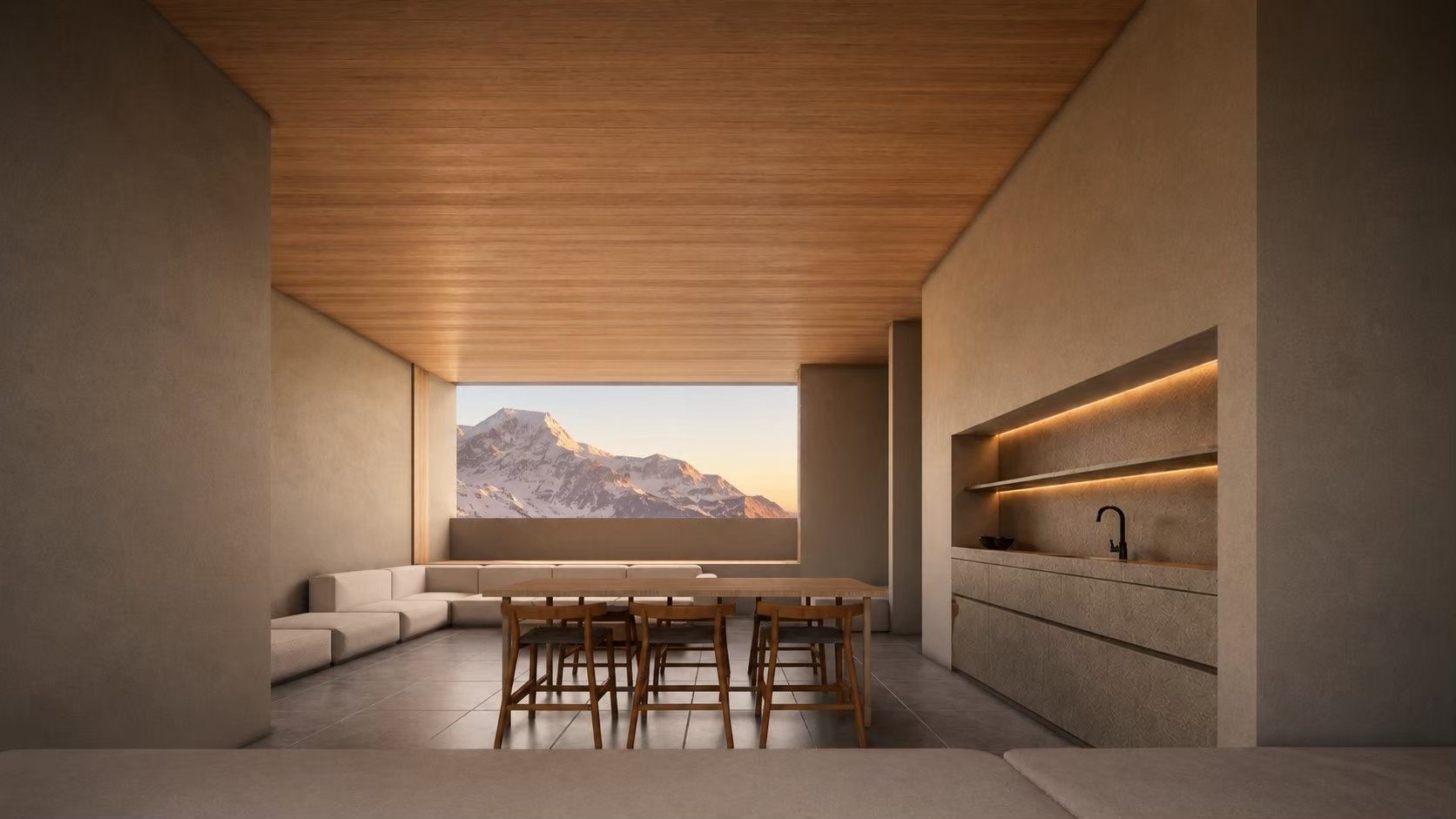
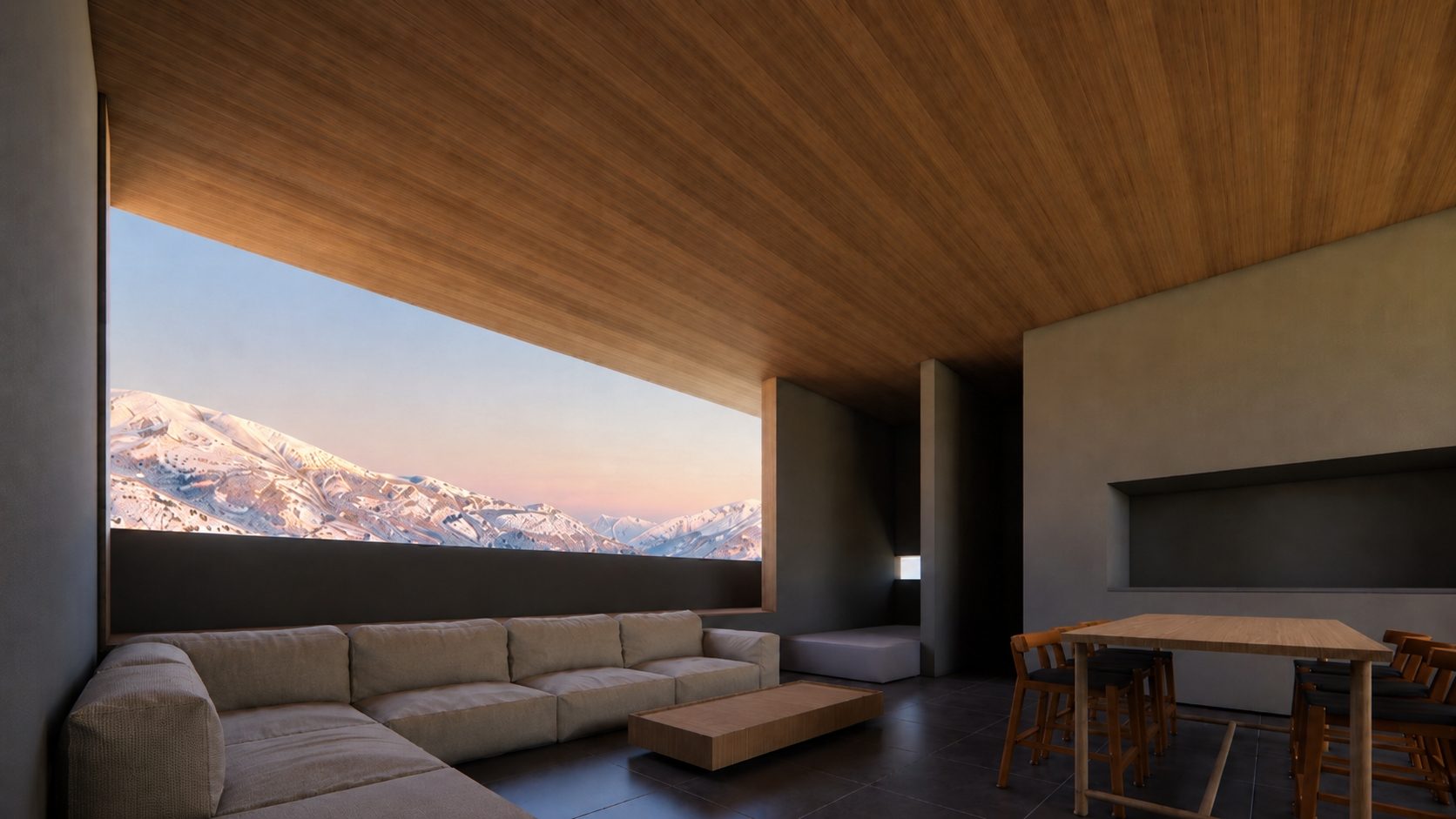
A dining room at dusk, facing a snow-covered mountain

REPAIR

As tension eases
the body returns to protecting itself.

Under continued tension, the body gives priority to responding to the changes in front of it. As tension eases, it can more readily turn its energy toward healing and protecting itself.

Studies have reported that wounds heal more slowly under severe stress. There are also reports of increased activity in the body’s protective immune cells after time spent in a forest.

Kiecolt-Glaser JK, et al. Slowing of wound healing by psychological stress. The Lancet. 1995;346(8984):1194–1196.
Li Q. Effect of forest bathing trips on human immune function. Environmental Health and Preventive Medicine. 2010;15(1):9–17.

CLARITY

When the body rests
the mind rests too.

Sustained concentration gradually wears down our capacity for attention. In natural settings, that capacity is said to recover more easily.

Studies have reported higher scores on attention tests after a walk in nature, and stronger creative thinking after several days spent in natural surroundings.

Berman MG, Jonides J, Kaplan S. The cognitive benefits of interacting with nature. Psychological Science. 2008;19(12):1207–1212.
Atchley RA, Strayer DL, Atchley P. Creativity in the wild: improving creative reasoning through immersion in natural settings. PLoS ONE. 2012;7(12):e51474.

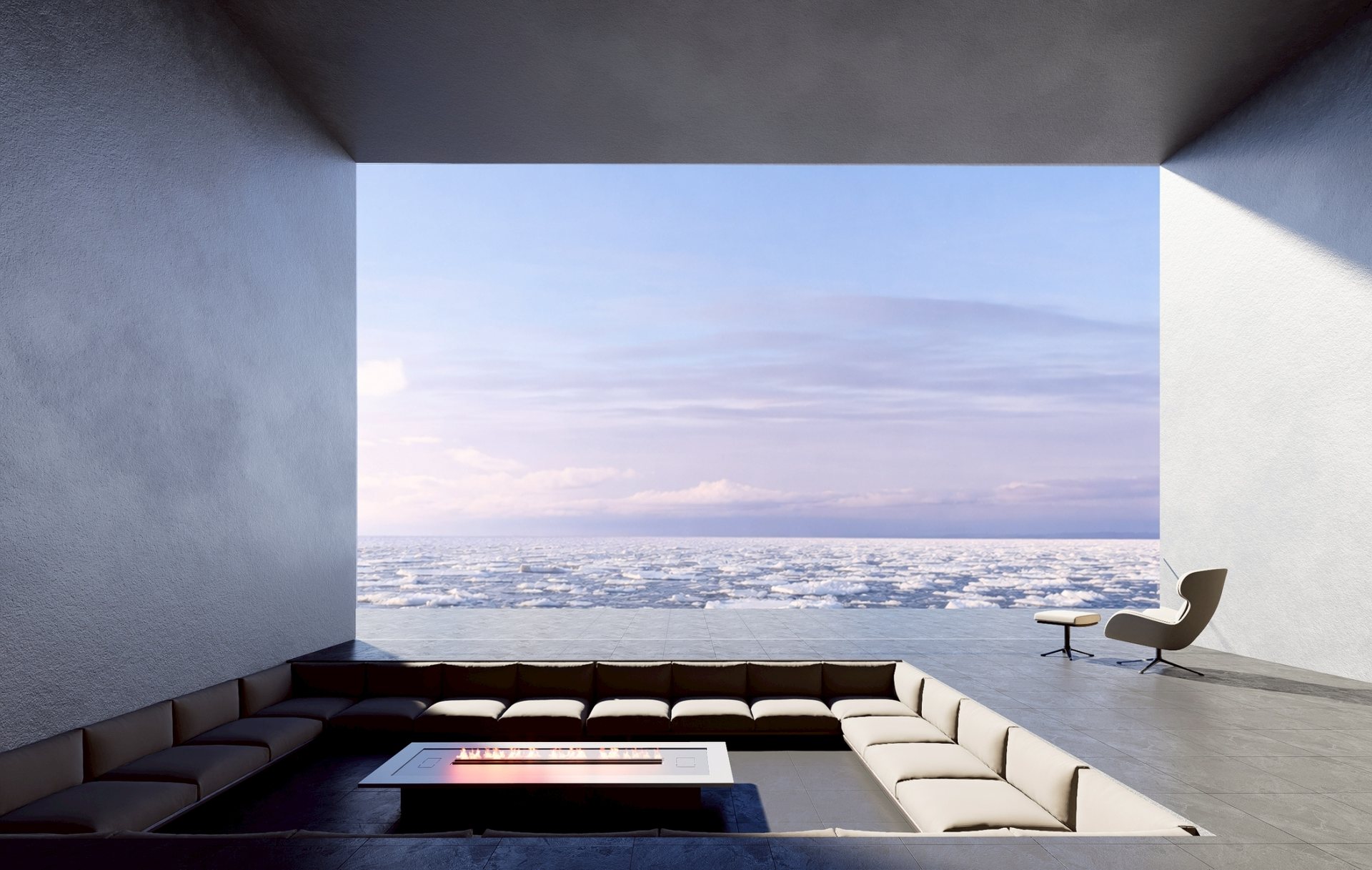
A sunken lounge around a fire, open to a sea of drift ice

ENVIRONMENT → BODY → STATE

Environment

  • Light
  • Sound
  • Temperature
  • Air
  • View
  • Nature
  • Information

Body

  • Autonomic nervous system
  • Hormones
  • Immunity
  • Metabolism

State

  • Tension and rest
  • Sleep
  • Focus
  • Mood
  • Physical condition
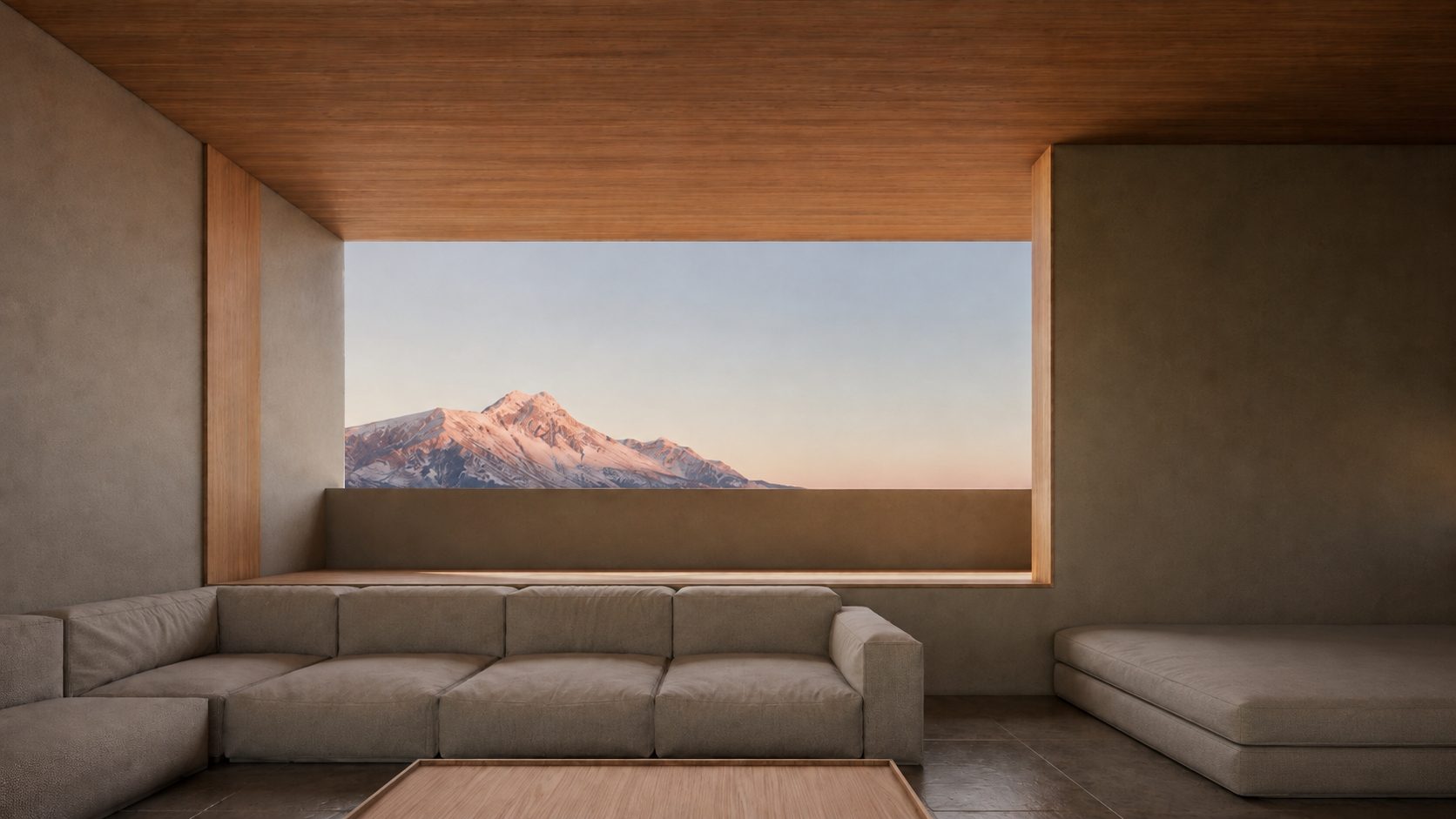
A sofa beside a window framing the mountain

So what if we were to shape
the environment the body receives?

What to keep.
What to reduce.
What to bring in.

TYPE U considers
the environment itself
that the body takes in each day.

VIEW

Shaping the view.

Roads, neighboring houses, man-made clutter — what isn’t needed is kept out of sight. Sky, mountains, light, greenery — toward what we want to keep, the view opens. We think about the very information that enters the field of view.

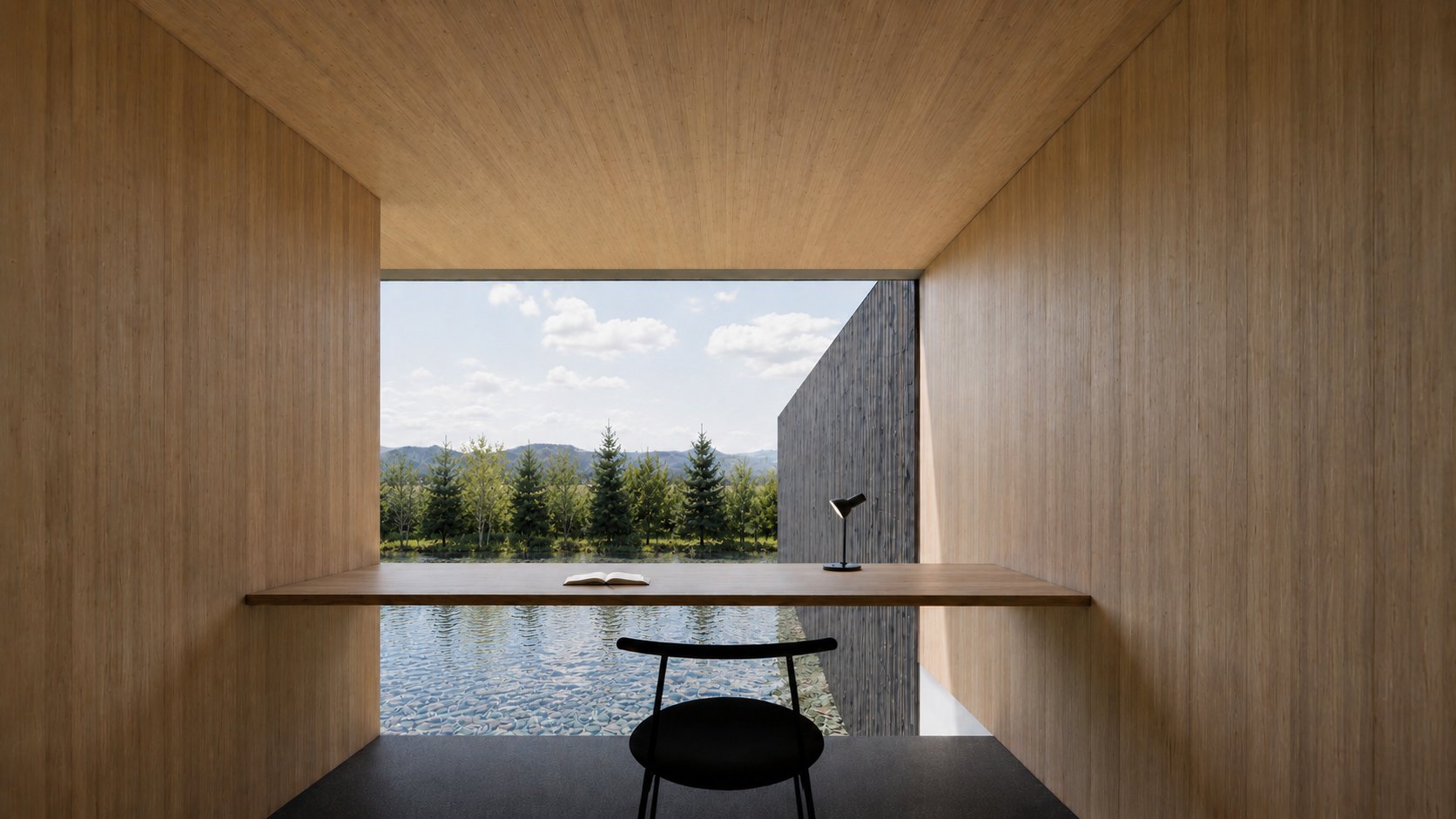
A wooden study looking out on still water and trees
LIGHT

Shaping the light.

The body’s internal clock is influenced by the rhythm of light and dark. Morning light, evening light, the sun’s angle shifting between summer and winter. We plan so that light can be received in step with the hour and the season.

SOUND

Shaping the sound.

Traffic, machinery, voices. Sound reaches the body even when we are not paying attention. We design spaces that soften noise from outside and make quiet easier to keep.

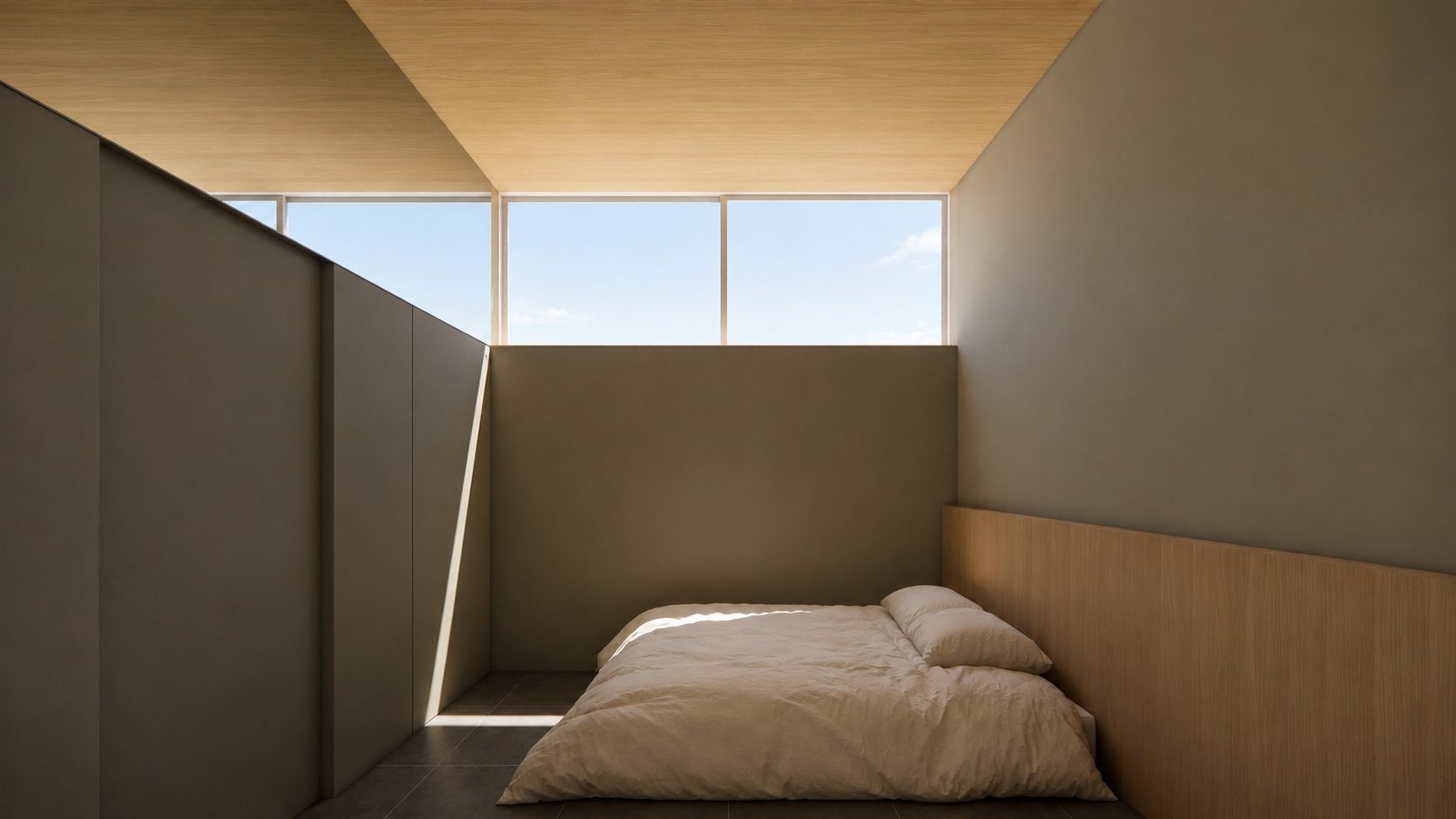
Quiet light falling along a wall
AIR

Shaping the air.

Air enters the body with every breath. Through ventilation and materials, we design spaces where air that is easy to breathe is easier to maintain.

TEMPERATURE

Shaping the temperature.

The body works to hold its temperature through heat and cold. Through insulation, sunlight and the paths the wind takes, we design thermal environments in which the body is less pressed to keep adjusting.

NATURE

Shaping our distance from nature.

Like light, sound and air, nature is part of the environment the body receives. Where to open a window, how much of the outside to bring in, where to screen out stimulation from outside. Through the boundary between outside and in, we consider our distance from nature.

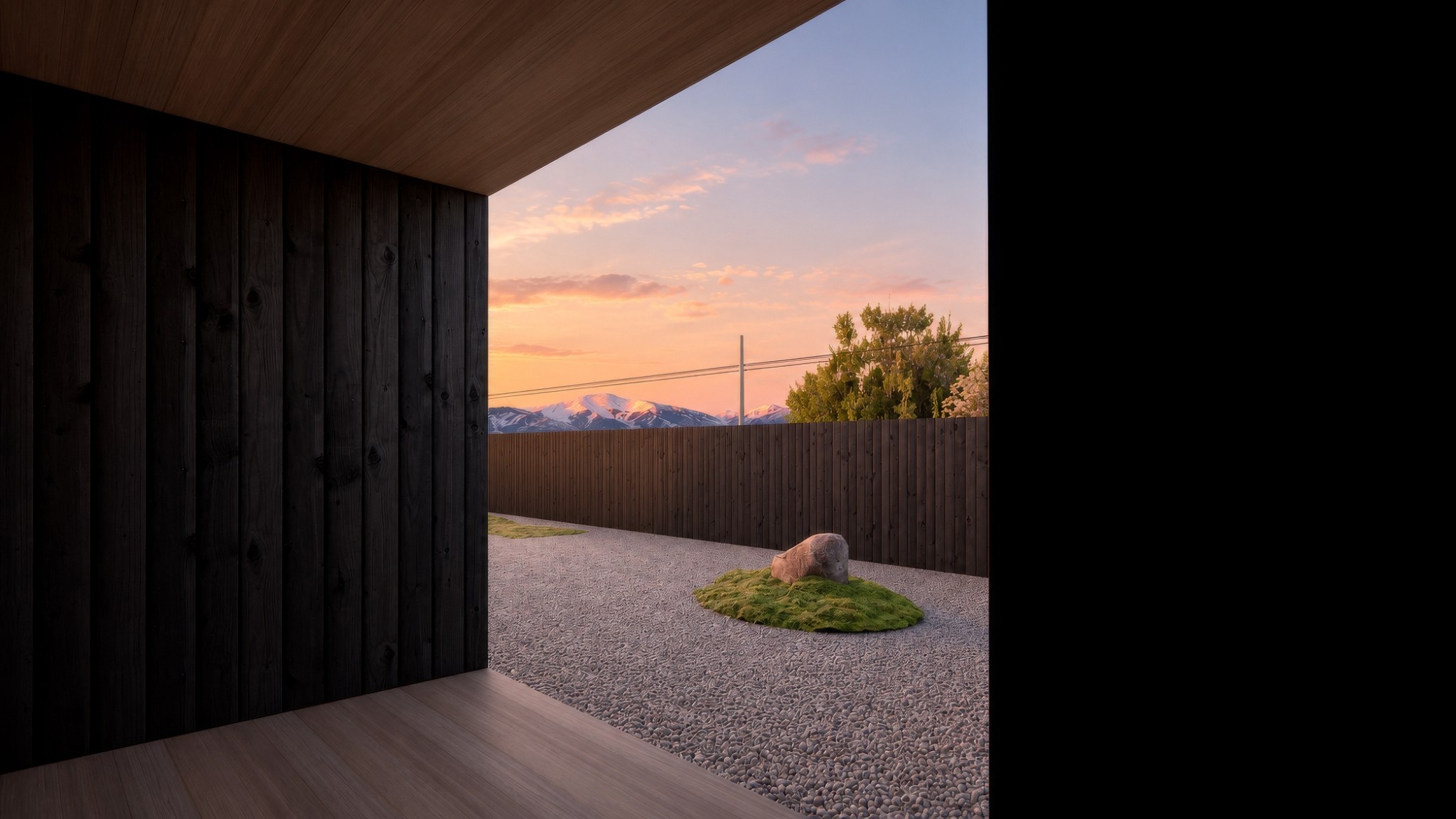
The garden at dusk, with distant mountains

What if we, too
are part of nature’s cycles?

What surroundings would you choose
and what would you think about there?

Architecture, considered
from the environment the body receives.